November 05, 2025
Spotlight on Sports Stars: Bringing a health intervention to life
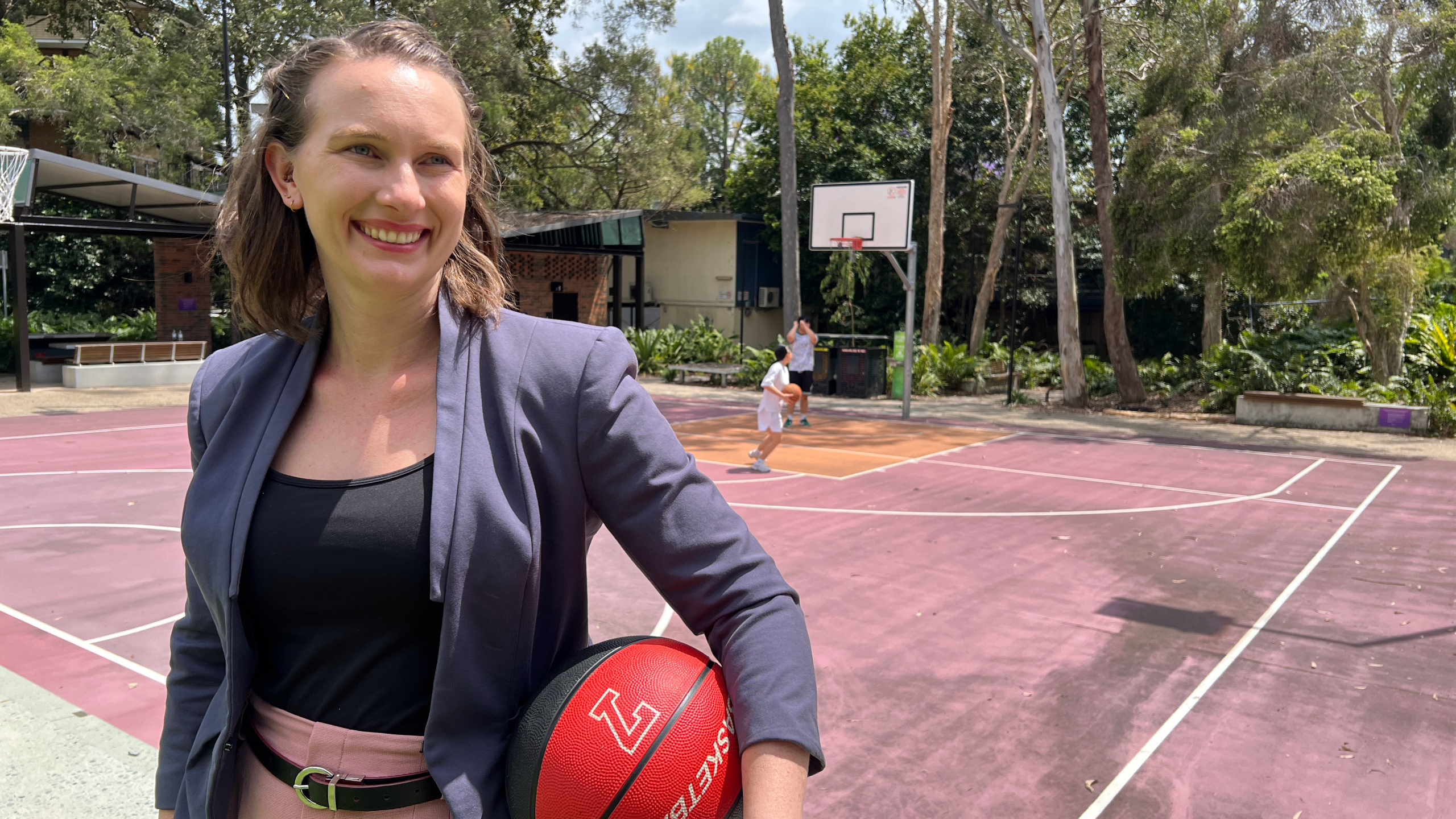
Dr Georgina Clutterbuck started Sports Stars, an allied health intervention that helps children with a disability be involved in sport, from the grassroots at a park in Ipswich.
She’s now working with UniQuest’s Director of Social and Behavioural Sciences, Margie Mahon, to build an online training program to upskill health practitioners to run Sports Stars around the world, in part thanks to a US$12,500 grant from U21 Health Sciences Group.
The Sports Stars path to commercialisation is not a typical one but Dr Clutterbuck has shared her learnings for other researchers interested in making a similar impact.
How did Sports Stars begin?
Sports Stars began in a public park in regional Australia. I was working as a physiotherapist with children who wanted to play sport but couldn’t quite find their way into community teams. Together with families and a multidisciplinary team, we started a small group focused on helping kids build the skills and confidence they needed to play. What started as an idea to help a handful of children learn some sports skills has grown into something much bigger that helps children with disabilities around the world find their place in sport in their local communities.
How did you begin to take Sports Stars out into the world?
Sports Stars started to grow when I began working with an organisation to scale up allied health group programs across Queensland. When I needed to write a business case, I realised there wasn’t much research in this area. The Sports Stars program was built on strong evidence. We know that engaging interventions that practice specific skills in real-world environments, and get the challenge level just right, are the ones that work, but there was nothing capturing the magic that happens when all those elements come together in a sports context. That’s when I embarked on my PhD evaluating the effectiveness of the program.
Every research project since has trained staff, who then go on to run Sports Stars in their own communities. I’ve presented this work around the world, with researchers and practitioners taking the findings into their own local environments. The partnership with Brazil was a major step. It grew through people being inspired to try something new, not just publications and conference presentations. Now, after over a decade of research establishing its effectiveness and feasibility, I’m back to focusing on scale and implementation so that I can make sure Sports Stars can reach as many children, families, and practitioners as possible.
How will the grant from U21 help you to scale?
The U21 grant will help us build Sports Stars CONNECT, an online training program to upskill health practitioners to run Sports Stars in their local communities. It’s the next logical step in scaling Sports Stars: equipping the people around children with the tools, confidence, and mindset to make sport accessible and enjoyable for everyone. The grant allows us to work with allied health and sports providers and young people with disabilities and their families in Australia, Brazil, Canada, Norway and Sweden to develop, pilot, and refine the training.
Tell me about your relationship with Margie Mahon at UniQuest and how we’ve been able to support you and Sports Stars along the way.
Margie and the UniQuest team have been invaluable in helping me translate a passion project into something sustainable. They’ve helped me navigate the practical side of bringing Sports Stars Connect into reality, particularly navigating intellectual property, partnership models, and how to balance research with real-world application. I’ve been able to think about commercialisation through the lens of sustainability and impact. Commercialising Sports Stars CONNECT is a practical way to ensure the program can expand beyond me as a researcher. It provides an avenue outside of research funding for the program to grow into the future, while staying true to the values that makes it work in the first place.
What has been your greatest challenge in bringing this program to children around the world?
There’s a huge appetite for sports inclusion in our world, but systems, training, and confidence often mean that evidence-based programs aren’t available in children’s local communities. We have to be aware that every context is different. What works in Queensland isn’t identical to what works in São Paulo! It takes time and strong partnerships to get it right.
When we run Sports Stars in a community, it’s never one big challenge. It’s a hundred thousand small ones, like not being able to find a ball pump when you need one, or the regular park having a swooping plover, or the juggle of multiple children all needing transport to school activities! That’s the reality for families, service providers, and researchers alike. We’re constantly solving tiny, practical problems while still trying to make big change.
Creating sustainable impact in that environment is hard, but it also means that when we succeed, we know that we can make waves in the real world, in the long term, for and with children with disabilities, their families and their communities.
What has been the best part of your journey with Sports Stars and what are you most proud of?
The best part has been seeing the faces of kids who realise, often for the first time, that sport can be for them. I’m incredibly proud of how adaptable Sports Stars has proven to be. Every new community we introduce to the program is able to make it their own, while still retaining the essential components that are at its heart. It’s always about joy, connection, and making a safe place to be challenged. I’m proud of the people, practitioners, researchers, families, and kids, who have shared my passion and grown the program over the last decade. Sports Stars exists as a concept and a movement beyond me now, which is an amazing thing to have done in the world.
Do you have any advice for other researchers who are trying to get their idea off the ground so that it can be adopted in practice or commercially?
Two seemingly competing concepts come to mind. First, it’s important to build slowly, and create a really strong foundation of research. At the same time, you’re never ‘done’ researching. If you don’t take a leap into implementation, an amazing program may never be seen outside of research, which is a real loss.
Progress has sometimes felt painfully slow, followed by periods where things feel like they’re on fast forward, like now with Sports Stars CONNECT! Ultimately, lasting change needs to live beyond the person with the passion, and so we all need think about what systems and structures will allow research to grow, endure, and reach the people who need it most. For Sports Stars, the CONNECT training program allows us to bring the program to health practitioners around the world, but it wouldn’t have been possible without the decade of research, collaboration and partnership behind us.
What’s next for Sports Stars and how would you like to see it develop from here?
Ultimately, I’d love to see Sports Stars embedded in inclusive sports pathways in Australia, and worldwide, to help more children with disabilities participate in sport in their local communities. After building, piloting and refinidng the Sports Stars CONNECT training, we’ll continue to work with our partners towards a connected global ecosystem where health and sport providers are confident, trained, and supported to include children with disability in sport at all levels.
Is there anything else you want to add?
If I could sum it up, I’d say the magic is in the chaos. Sports Stars is nothing like 1:1 therapy in a clinical room. There is grass and bugs and sun, kids running in different directions, parents and caregivers juggling a million things to get there, and the occasional natural disaster or pandemic prompting some creative rescheduling. But it is by being in that chaos that change happens, because that chaos is real life. Perfect running alignment in a controlled clinical or research setting is a million miles away from what children, and families experience day to day. Sports Stars is a transition-focused program not just for kids, but for families and practitioners too. It provides an opportunity for everyone to build confidence and step into that joyful, unpredictable, very human space where meaningful participation happens.
Follow Dr Clutterbuck on LinkedIn here.
Latest news
September 23, 2026
Two UQ research teams supported by UniQuest have secured $4 million in CUREator+ funding to advance potential new therapies for Alzheimer’s disease and dementia, accelerating the journey from laboratory discovery towards clinical development.
September 21, 2026
A homegrown vaccine platform demonstrated in animals could soon become a ‘plug-and-play’ system to rapidly adapt to future mosquito-borne disease threats in humans.
June 19, 2026
A promising new treatment for advanced and therapy-resistant prostate cancer developed from research conducted at The University of Queensland has taken a major step towards the clinic.